
In Virginia, construction and service contracts form the backbone of thousands of business and homeowner projects each year. Yet, contract disputes remain one of the most common civil complaints filed in state courts.
A contract breach by the contractor can cause serious financial stress. Homeowners may face unsafe or incomplete work. Businesses may lose valuable time or revenue. Understanding what legal actions you can take under Virginia law when a contractor breaches a contract is the first step toward protecting your interests and seeking fair compensation. Let’s take a closer look at it.
What Constitutes a Contractor Breach?
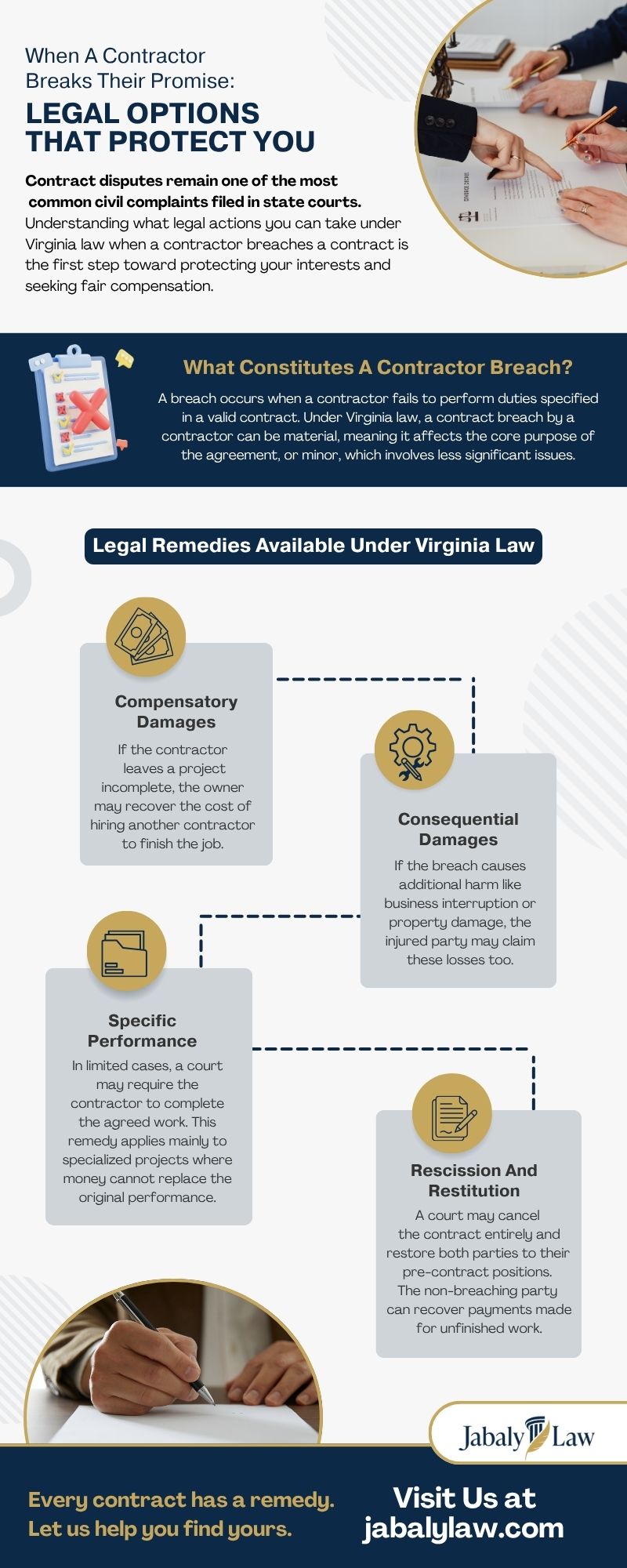
A breach occurs when a contractor fails to perform duties specified in a valid contract. Under Virginia law, a contract breach by a contractor can be material, meaning it affects the core purpose of the agreement, or minor, which involves less significant issues.
Common examples include:
- Failing to complete a project on time.
- Using poor-quality or non-specified materials.
- Ignoring agreed-upon designs or building codes.
- Abandoning the project midway.
- Failing to pay subcontractors or obtain required permits.
When a contractor commits a material breach, the other party can stop payment, terminate the contract, and pursue legal remedies through the courts.

Legal Remedies Available Under Virginia Law
Virginia law provides several remedies for those harmed by a contractor’s breach. The type of remedy depends on the nature and extent of the loss.
1. Compensatory Damages
These damages reimburse the injured party for direct financial loss. For instance, if the contractor leaves a project incomplete, the owner may recover the cost of hiring another contractor to finish the job.
2. Consequential Damages
If the breach causes additional harm like business interruption or property damage, the injured party may claim these losses too.
3. Specific Performance
In limited cases, a court may require the contractor to complete the agreed work. This remedy applies mainly to specialized projects where money cannot replace the original performance.
4. Rescission and Restitution
A court may cancel the contract entirely and restore both parties to their pre-contract positions. The non-breaching party can recover payments made for unfinished or defective work.
Contractor Licensing and Consumer Protection
Virginia law requires contractors to be licensed under the Department of Professional and Occupational Regulation (DPOR). If a contractor performs work without a valid license, the contract may be void or unenforceable.
Homeowners and businesses may also have protections under the Virginia Consumer Protection Act if the contractor engaged in misrepresentation, fraud, or deceptive practices. These laws strengthen the remedies available for serious contract violations.
Experienced Breach of Contract Lawyer For Breach Of Contract Claims
Jabaly Law represents clients across Virginia in construction and contract-related disputes. If you are facing a contract breach by a contractor, the breach of contract lawyer in Arlington, McLean, Tysons, Vienna, Alexandria, Fairfax, and other areas of Virginia can assist in evaluating the agreement, determining damages, and representing your interests in court. The law firm focuses on clear communication, thorough case preparation, and practical solutions.
For professional guidance, contact Jabaly Law today to schedule a business law consultation.