



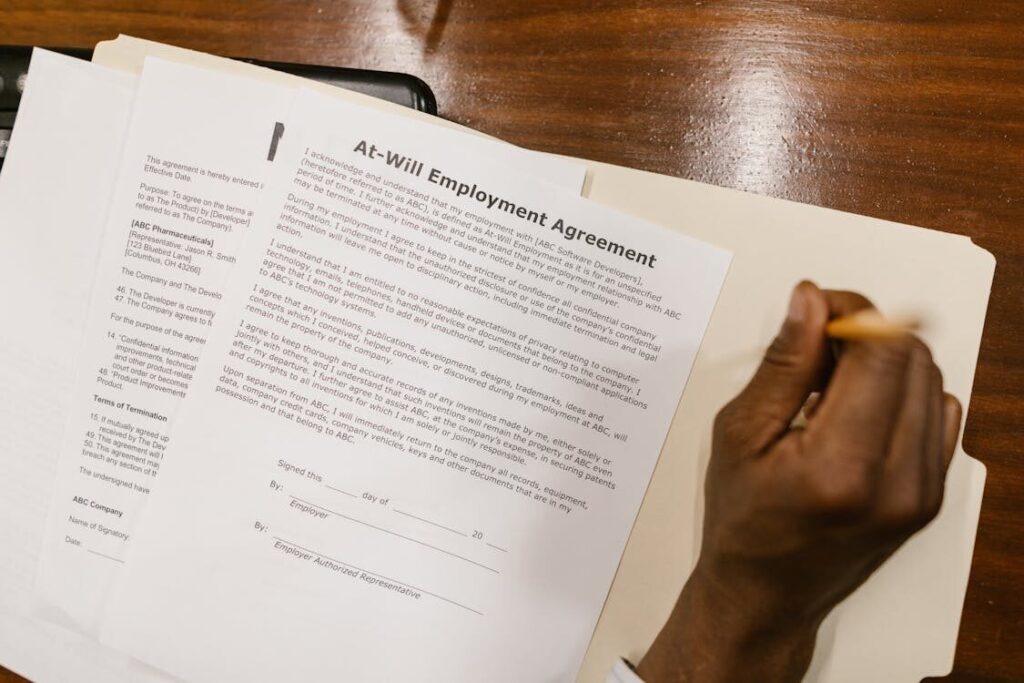
Employee departures often create tension in commercial relationships, particularly when restrictive covenants are involved. Non-solicitation provisions are commonly used to limit a former employee’s ability to engage with clients, customers, or colleagues after leaving a business. While these clauses are designed to protect legitimate business interests, disputes frequently arise regarding their scope and enforceability. In Virginia, courts regularly address non-solicitation enforcement in commercial litigation.
Function of Non-Solicitation Clauses
Non-solicitation agreements are intended to prevent former employees from diverting business opportunities or disrupting established relationships. These provisions typically focus on:
- Restricting contact with existing clients or customers
- Limiting recruitment of current employees
- Preserving goodwill developed during employment
Unlike broader restrictive covenants, non-solicitation clauses are generally narrower in scope. However, disputes often arise when parties disagree on how far those restrictions extend in practice.
Triggers for Litigation
Commercial disputes involving non-solicitation enforcement frequently emerge after an employee transitions to a competing business or establishes a new venture. Common triggers include:
- Client Migration: Former clients begin working with the departing employee’s new employer
- Employee Recruitment: Movement of staff following a key individual’s departure
- Use of Relationship Knowledge: Leveraging familiarity with client preferences or business operations
- Ambiguous Contract Language: Unclear definitions of “solicitation” or “contact”
These issues can escalate quickly, particularly when financial interests and ongoing business relationships are affected.
Judicial Evaluation in Virginia
Virginia courts assess non-solicitation enforcement through a framework that emphasizes reasonableness and contractual clarity. Key considerations include:
- Scope of Restriction: Whether the clause is narrowly tailored to protect legitimate business interests without imposing unnecessary limitations
- Geographic and Temporal Limits: Whether the duration and geographic reach are appropriate in light of the business context
- Definition of Prohibited Conduct: Whether the agreement clearly defines what constitutes solicitation or restricted activity
- Impact on Competition: Whether enforcement would unduly restrict fair competition or workforce mobility
Courts do not automatically enforce restrictive covenants; instead, they examine the balance between protecting business interests and maintaining a competitive marketplace.
Evidentiary Considerations
Disputes over non-solicitation agreements often involve detailed factual analysis. Courts may review:
- Communications: Emails, messages, or marketing outreach directed at former clients
- Client Movement Patterns: Timing and circumstances surrounding changes in business relationships
- Employment Transitions: Roles and responsibilities of the departing employee before and after departure
- Contractual Documentation: The language and structure of the agreement itself
This evidence helps determine whether the conduct falls within the scope of the restriction and whether enforcement is appropriate.
Drafting and Risk Management Considerations
Careful drafting can reduce the likelihood of disputes involving non-solicitation provisions:
- Clear Definitions: Specify what constitutes solicitation, including direct and indirect actions
- Reasonable Limits: Establish appropriate timeframes and geographic boundaries
- Consistent Language: Ensure alignment with other contractual provisions, such as confidentiality clauses
- Documentation Practices: Maintain records of client interactions and contractual obligations
Well-structured agreements can provide clarity and reduce uncertainty when disputes arise.

Disputes involving non-solicitation enforcement can affect client relationships and business continuity. At Jabaly Law, we assist companies in evaluating restrictive covenants, addressing potential violations, and navigating litigation strategy. With a team of commercial litigation attorneys, we work with organizations in Washington, DC, and Northern Virginia, especially Tysons and Alexandria, to interpret agreements, assess risk, and respond to claims involving employee transitions. Our team also provides legal counsel services for businesses facing complex commercial disputes tied to workforce movement.
Contact us now.